
Handling Controlled Substances: Your Facility’s Unflinching Guide
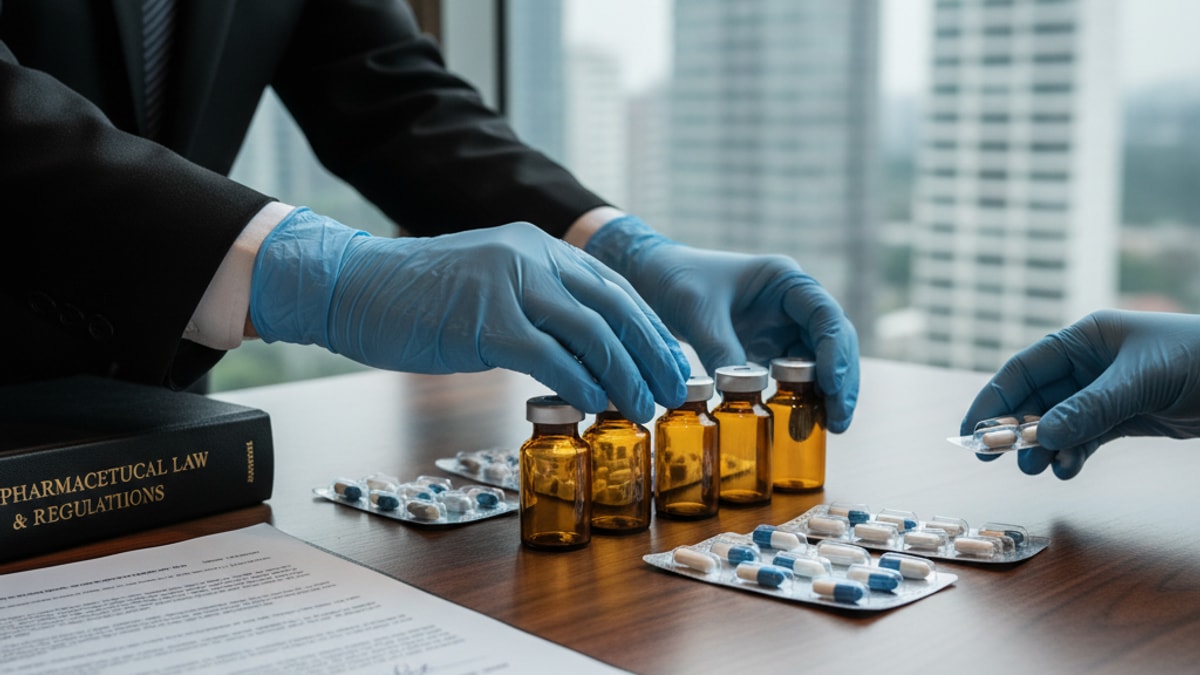
Let’s be honest, the phrase “controlled substances” carries a certain weight, doesn’t it? It immediately brings to mind strict rules, heavy oversight, and the very real consequences of getting things wrong. And for good reason. For any healthcare facility, from a sprawling hospital network to a local dental practice, knowing how to handle controlled substances isn't just another item on a compliance checklist. It's a foundational, non-negotiable pillar of your entire operation.
Our team at Remedi has spent years in the trenches of medical waste management, and we've seen firsthand what happens when protocols are lax or misunderstood. The risks aren't just theoretical; they involve crippling fines from the Drug Enforcement Administration (DEA), loss of licensure, and even criminal charges. But beyond the penalties, it’s about patient safety and community trust. We're talking about powerful medications that, in the wrong hands, can cause immense harm. So, this isn't about fear-mongering. It's about empowering you with the clarity and confidence to build an unflinching, ironclad system for managing these materials from the moment they enter your facility to their final, documented destruction.
Why This Isn't Just "Another Regulation"
It’s easy to get bogged down in the sheer volume of healthcare regulations. You're juggling OSHA standards, HIPAA privacy rules, and a dozen other compliance frameworks. It can feel like a relentless, moving-target objective. But the DEA's regulations around controlled substances exist in a class of their own. Why? Because the stakes involve diversion and public safety.
The entire system is designed to create a closed loop. Every single dose must be accounted for throughout its entire lifecycle. This concept, known as the chain of custody, is absolute. Any break in that chain is considered a potential diversion until proven otherwise. We can't stress this enough: the burden of proof is on you, the registrant. You must be able to demonstrate, with impeccable documentation, exactly where every milligram of a controlled substance is at all times.
Think of it this way: a misplaced biohazard bag is a serious issue, but a missing vial of Fentanyl is a potential public health crisis. That's the significant, sometimes dramatic, shift in perspective required here. The DEA's interest isn't just in proper disposal for environmental reasons; it's in preventing these powerful drugs from hitting the streets. Our experience shows that facilities that internalize this 'why'—the critical importance of preventing diversion—are the ones that build the most robust and successful compliance programs.
The Bedrock of Control: DEA Registration and Scheduling
Before you can even possess a controlled substance, your facility and its practitioners must be properly registered with the DEA. This isn't a one-time step; it's an ongoing requirement that must be kept current. But registration is just the beginning. The real nuance comes from understanding the different schedules of controlled substances.
The DEA categorizes drugs into five schedules (Schedule I through Schedule V) based on their accepted medical use and potential for abuse or dependency. Schedule I drugs (like heroin or LSD) have a high potential for abuse and no currently accepted medical use, so you typically won't encounter them in a standard clinical setting. The substances you'll most often handle fall into Schedules II through V.
- Schedule II: High potential for abuse, which may lead to severe psychological or physical dependence. Examples include hydromorphone (Dilaudid), methadone, oxycodone (OxyContin, Percocet), and fentanyl.
- Schedule III: Moderate to low potential for physical and psychological dependence. Examples include products containing not more than 90 milligrams of codeine per dosage unit (Tylenol with Codeine) and buprenorphine (Suboxone).
- Schedule IV: Low potential for abuse and low risk of dependence. Examples include alprazolam (Xanax), diazepam (Valium), and lorazepam (Ativan).
- Schedule V: Lower potential for abuse than Schedule IV and consist of preparations containing limited quantities of certain narcotics. Examples include cough preparations containing not more than 200 milligrams of codeine per 100 milliliters (Robitussin AC).
Why does this matter so much? Because the handling, storage, and record-keeping requirements become progressively stricter as you move from Schedule V to Schedule II. You absolutely cannot treat a Schedule IV substance with the same protocols as a Schedule II. Your internal policies must reflect these critical distinctions. It's comprehensive. That's the key.
Secure Storage: More Than Just a Locked Cabinet
So, you've received a shipment of a Schedule II narcotic. Where does it go? The DEA's answer is clear and unforgiving: it must be stored in a securely locked, substantially constructed cabinet or safe. For practitioners, this often means a steel cabinet or safe, while pharmacies and other facilities may require vaults.
But let's unpack what "substantially constructed" really means. This isn't about using a standard office supply cabinet with a flimsy lock. We're talking about a level of security designed to prevent unauthorized access. The specifics can vary, but the principle is unwavering: the storage must be diversion-proof. Our team recommends conducting a self-audit of your storage. Is the cabinet or safe bolted to the floor or wall? Is access strictly limited to a small number of authorized and vetted personnel? Is the key or combination itself secured?
And another consideration: simply locking everything up together isn't enough. While it's permissible to store Schedules III-V substances alongside Schedule II substances (if they're all under the same high-security lock and key), you cannot store them with your general, non-controlled drug stock. They must be segregated. This physical separation is a critical control point that auditors will look for immediately. It's a simple, visual confirmation that you understand and respect the unique risks associated with these medications.
The Chain of Custody: Impeccable Record-Keeping is Your Shield
If secure storage is the vault, then your record-keeping is the alarm system, the surveillance cameras, and the security guard all rolled into one. It is your single most important defense against allegations of diversion. We mean this sincerely: your compliance program lives or dies by its documentation.
Every single action involving a controlled substance must be recorded. This includes:
- Ordering: Using the official DEA Form 222 for Schedule I and II substances.
- Receiving: Verifying the shipment against the order form and invoice, and immediately documenting its addition to your inventory.
- Dispensing: Recording every dose administered to a patient, including the patient's name, date, drug, dosage, and the signature of the administering professional.
- Disposal/Destruction: Documenting the process of rendering the substance non-retrievable (more on this in a moment).
These can't just be casual notes in a logbook. The DEA requires a biennial inventory, but our team has found that the most compliant facilities conduct these inventories far more frequently—often on a monthly or even weekly basis for high-volume substances. These are perpetual inventories, meaning you maintain a running balance of what you should have on hand. Any discrepancy between your records and the physical count is a red flag that must be investigated immediately. If you suspect theft or significant loss, you are required to notify your local DEA Diversion Field Office within one business day and submit a DEA Form 106.
Your documentation creates an unbroken audit trail. Anyone should be able to pick up your logs and trace the path of a single vial from the moment it was received to its final disposition. It's not just about tracking inventory; it's about accountability. That's the reality. It all comes down to that trail.
Witnessing and Documentation: The Two-Person Rule
One of the most critical control points, particularly for waste, is the "two-person rule." For any action involving the disposal or destruction of a controlled substance, two qualified employees should be present to witness the event. This provides a crucial layer of oversight and verification.
Think about it. Having a single person handle the wasting of unused Fentanyl from a vial creates a massive opportunity for diversion. But when a second person is required to co-sign the log, verifying that the substance was properly disposed of, you drastically reduce that risk. Both individuals should sign and date the inventory log, attesting to the fact that they witnessed the event.
Who qualifies as a witness? This should be clearly defined in your facility's policies and procedures. Generally, it should be another licensed clinical professional who is authorized to handle controlled substances. It cannot be just any employee. This dual control is a powerful deterrent and a cornerstone of a compliant program. We've seen it work time and time again. It builds a culture of shared responsibility, which is exactly what you want.
Disposal vs. Destruction: What's the Real Difference?
This is where things can get confusing, but the distinction is critical. In the past, it was common practice to "dispose" of certain liquid pharmaceutical wastes by flushing them down the drain. Let's be clear: this is no longer an acceptable practice. It's an environmental hazard and, for controlled substances, it fails to meet the DEA's standard for destruction.
The DEA requires that controlled substances be rendered "non-retrievable." This means they must be altered through a physical or chemical process to a state where they cannot be transformed back into a usable substance. Flushing does not meet this standard. Neither does mixing it with coffee grounds or kitty litter and tossing it in the trash (a surprisingly common misconception).
True, compliant destruction is a scientific process. This is where partnering with a specialist in Controlled Substance Disposal is not just a convenience; it's a strategic compliance decision. At Remedi, we utilize state-of-the-art methods to ensure that these substances are permanently and irreversibly destroyed, providing you with a complete, documented audit trail, including the necessary DEA Form 41 (Registrants Inventory of Drugs Surrendered).
Here's a breakdown of common approaches and their compliance levels:
| Method | Description | DEA Compliance Status | Key Considerations |
|---|---|---|---|
| Sewer Disposal (Flushing) | Pouring liquid waste down a sink or toilet. | Non-Compliant | Prohibited by the DEA and EPA. Fails the "non-retrievable" standard and contaminates waterways. |
| Mixing with Trash | Combining waste with coffee grounds or kitty litter in a bag. | Non-Compliant | Does not render the substance non-retrievable. The drug can still be extracted. Creates a high risk for diversion. |
| On-site Chemical Denaturing | Using a commercially available kit or pouch to chemically alter the substance. | Conditionally Compliant | Can be compliant if the product is proven to meet the non-retrievable standard. Requires rigorous staff training and documentation. |
| Professional Mail-Back Service | Placing denatured substances into a secured, pre-paid mail-back container sent to a licensed destruction facility. | Compliant | A secure and documented method. Shifts the final destruction liability to a certified vendor. Requires proper on-site handling before mailing. |
| Full-Service Pickup & Destruction | A licensed waste management partner collects the substances for transport to a secure destruction facility. | Highly Compliant | The most secure and comprehensive option. Provides a full chain of custody from your facility to final destruction, managed by experts. |
Our experience shows that while on-site methods can seem cheaper initially, the risk of human error in training, documentation, and execution is significant. A full-service approach provides peace of mind and the most robust legal protection.
Training Your Team: The Human Element of Compliance
You can have the best safes, the most detailed logs, and the most secure protocols in the world, but if your team isn't properly trained, your program will fail. It's that simple. Compliance is an active, ongoing process, not a passive one. It relies on every single person who handles these substances to understand their role and responsibilities.
Effective training goes beyond a one-time onboarding session. We recommend annual, mandatory training for all relevant staff, with periodic refreshers. This training should cover:
- The DEA schedules and their specific handling requirements.
- Your facility's exact procedures for storage, access, and security.
- Proper documentation for receiving, dispensing, and wasting.
- The two-person witness rule and its importance.
- What constitutes a loss or discrepancy and the exact steps to take if one is discovered.
This is also an area where broader compliance knowledge is beneficial. Understanding the fundamentals of waste management is part of a holistic approach to safety, which is why we often find that clients who engage us for services like Osha & Hipaa Compliance training build a stronger overall culture of safety that positively impacts their controlled substance handling.
Document every training session. Keep records of who attended and what topics were covered. In the event of an audit, demonstrating a robust and ongoing training program is a massive point in your favor. It shows the DEA you are proactive, not reactive, about your responsibilities.
Common Mistakes We See (And How to Avoid Them)
After years of working with healthcare facilities of all sizes, our team has seen recurring patterns of non-compliance. These aren't usually malicious acts; they're almost always the result of misunderstanding, complacency, or inadequate systems.
Here are some of the most common pitfalls:
Sloppy Record-Keeping: This is, without a doubt, the number one issue. Missing signatures, incomplete entries, running balances that don't add up. How to fix it: Implement a policy of double-checking all log entries. Make perpetual inventory checks a routine, not a special event. Use a logbook with numbered pages to prevent page removal.
Improper Witnessing: The "second signature" is obtained after the fact, or the witness doesn't actually observe the action. How to fix it: Your training must be crystal clear that witnessing is an active, not passive, process. Both parties must be physically present and observe the entire process before signing.
Insecure Storage: Using low-quality cabinets, sharing keys or combinations too widely, or leaving the storage unit unlocked "just for a minute." How to fix it: Invest in a true, substantially constructed safe. Restrict access to the absolute minimum number of people required. Treat the key or combination with the same security as you would the key to your own home.
Ignoring Small Discrepancies: A single pill is missing, and it's written off as a minor error. How to fix it: There is no such thing as a minor discrepancy. Every single dose must be accounted for. Any loss, no matter how small, must be investigated and documented thoroughly. Small, recurring losses are a classic sign of diversion.
Avoiding these mistakes comes down to one thing: diligence. It's about fostering a culture where precision isn't just encouraged; it's demanded. It's about empowering every team member to speak up if they see a process that isn't being followed correctly.
Choosing a Partner for Final Destruction
Ultimately, the final step in the lifecycle of a controlled substance is its destruction. As we've discussed, this must be done in a way that renders the substance non-retrievable. For the vast majority of healthcare facilities, managing this complex process in-house is simply not feasible or wise. The liability is too great.
That's why choosing the right partner is so important. You're not just hiring a vendor; you're entrusting them with a critical piece of your compliance and risk management strategy. What should you look for?
- Proper Licensing and Certification: They must be fully licensed by the DEA and any other relevant state and federal agencies to handle and destroy controlled substances.
- Airtight Chain of Custody: They should provide a clear, documented chain of custody from the moment the material leaves your facility to its final destruction.
- Secure Logistics: This includes secure vehicles, vetted and trained personnel, and secure transfer protocols.
- Proof of Destruction: They must provide you with official documentation (like a completed DEA Form 41 or a certificate of destruction) that you can keep in your records to prove you met your legal obligations.
At Remedi, this is the standard we live by. We built our entire process around providing our clients with absolute confidence and an unimpeachable paper trail. It’s about taking that final, critical step of the process off your shoulders so you can focus on patient care.
Building a culture of compliance takes diligence, but it's the only way to operate safely and legally. It's not just about avoiding fines; it's about protecting your patients, your staff, and your community. And that's a responsibility we're proud to share. If you're ready to build an ironclad program, Get Started Today.
Frequently Asked Questions
What is the primary difference between a Schedule II and a Schedule III controlled substance?
▼
The main difference lies in the potential for abuse and dependence. Schedule II drugs have a high potential for abuse leading to severe dependence, while Schedule III drugs have a moderate to low potential. This distinction dictates much stricter storage, ordering, and record-keeping requirements for Schedule II substances.
Can we ever flush expired or unused controlled substances down the toilet?
▼
Absolutely not. This practice is prohibited by both the DEA and the EPA. It fails to meet the DEA’s “non-retrievable” standard for destruction and causes significant environmental contamination. All controlled substances must be destroyed using a compliant method.
How long are we required to keep records related to controlled substances?
▼
The DEA requires all records, including inventories and disposal forms like DEA Form 41, to be kept for a minimum of two years. However, our team strongly recommends keeping these records for longer, as some state regulations may require a longer retention period.
Who is qualified to witness the wasting or destruction of a controlled substance?
▼
This should be another authorized and licensed employee who is permitted to handle controlled substances, such as another nurse, physician, or pharmacist. The key is that the witness understands the process and can legitimately attest to the destruction.
What is DEA Form 41 and when is it used?
▼
DEA Form 41, the “Registrants Inventory of Drugs Surrendered,” is the official form used to document the destruction of controlled substances. It must be filled out accurately and kept on file to prove that the substances have been compliantly destroyed.
Is a mail-back program a compliant method for controlled substance disposal?
▼
Yes, a mail-back program from a reputable, licensed vendor can be a fully compliant method. These systems provide containers and denaturing agents to render the substance non-retrievable before it’s mailed to a certified destruction facility, providing a secure chain of custody.
What are the most common record-keeping errors DEA auditors find?
▼
The most frequent errors include incomplete log entries, missing signatures, simple math errors in running inventories, and failing to document witness signatures for waste. These seemingly small mistakes can be viewed as major compliance failures during an audit.
How should our facility handle a spill of a liquid controlled substance?
▼
A spill should be treated as a loss. The event must be documented immediately on the inventory record, and if possible, two people should witness and sign off on the cleanup. If the loss is considered significant, you must report it to the DEA via a Form 106.
Do the same DEA requirements apply to veterinary clinics?
▼
Yes, veterinary clinics that prescribe, store, and dispense controlled substances are held to the same DEA regulations as human healthcare facilities. They must maintain proper registration, storage, record-keeping, and destruction protocols.
How often should our staff be trained on handling controlled substances?
▼
We recommend mandatory, comprehensive training for all relevant staff at least once per year. Periodic refreshers or ‘micro-trainings’ on specific topics throughout the year are also highly effective at keeping compliance top of mind.
Can our facility take back unused controlled substances from patients for disposal?
▼
Generally, no. Only authorized collectors, such as certain retail pharmacies or law enforcement agencies, can accept controlled substances back from end-users. Your facility should focus on the proper disposal of substances used or wasted within your own four walls.
What is the first thing a DEA auditor will ask to see?
▼
Auditors will almost always start by asking for your registration certificate, your biennial inventory records, and your ordering forms (DEA Form 222). Having these documents organized and readily available makes a strong first impression.